So You Want to Train as a Therapist — Here Is What Nobody Tells You
Most people who come to train with me have been thinking about it for a long time.
Not weeks. Years. There is usually a moment — a treatment they loved, a job they have outgrown, a life that has quietly stopped fitting — that finally tips them from thinking into doing. But by the time they find their way to me, many of them are carrying something else alongside the excitement. A question they are almost too nervous to ask out loud.
Am I actually capable of this?
The answer, in almost every case, is yes. But how you train matters more than most people realise — and I want to be honest about that, because I think it is the most useful thing I can tell you before you commit to anything.
There Is More Than One Way to Train — and They Are Not the Same

Let me start with something I believe in saying plainly, because not everyone in this industry does.
There are different levels of therapy training, and they produce meaningfully different outcomes — not in terms of who you are as a person, or how much care you bring to your work, but in terms of how prepared you genuinely are when you finish.
Short courses — CPD-level qualifications — are a real and valuable thing. They allow you to work as a fully insured, accredited therapist, and for many people they are the right starting point. Perhaps you cannot commit the time or financial resource to a longer programme right now. Perhaps you want to explore a therapy before going deeper. Perhaps you simply want to learn something for your own purposes, or to look after someone you love. All of that is completely legitimate, and our short courses are designed to serve those needs properly.
But I am also about to launch our Ofqual-regulated, VTCT-accredited Level 3 Diploma programmes — in body massage, reflexology, and aromatherapy — and I want to be clear about why I think they represent something different. Not because I want to sell you the most expensive option. Because after fifteen years of clinical practice and twenty years of teaching, I have seen what thorough grounding actually does for a therapist, and I think you deserve to know.
What a Gold Standard Qualification Actually Gives You

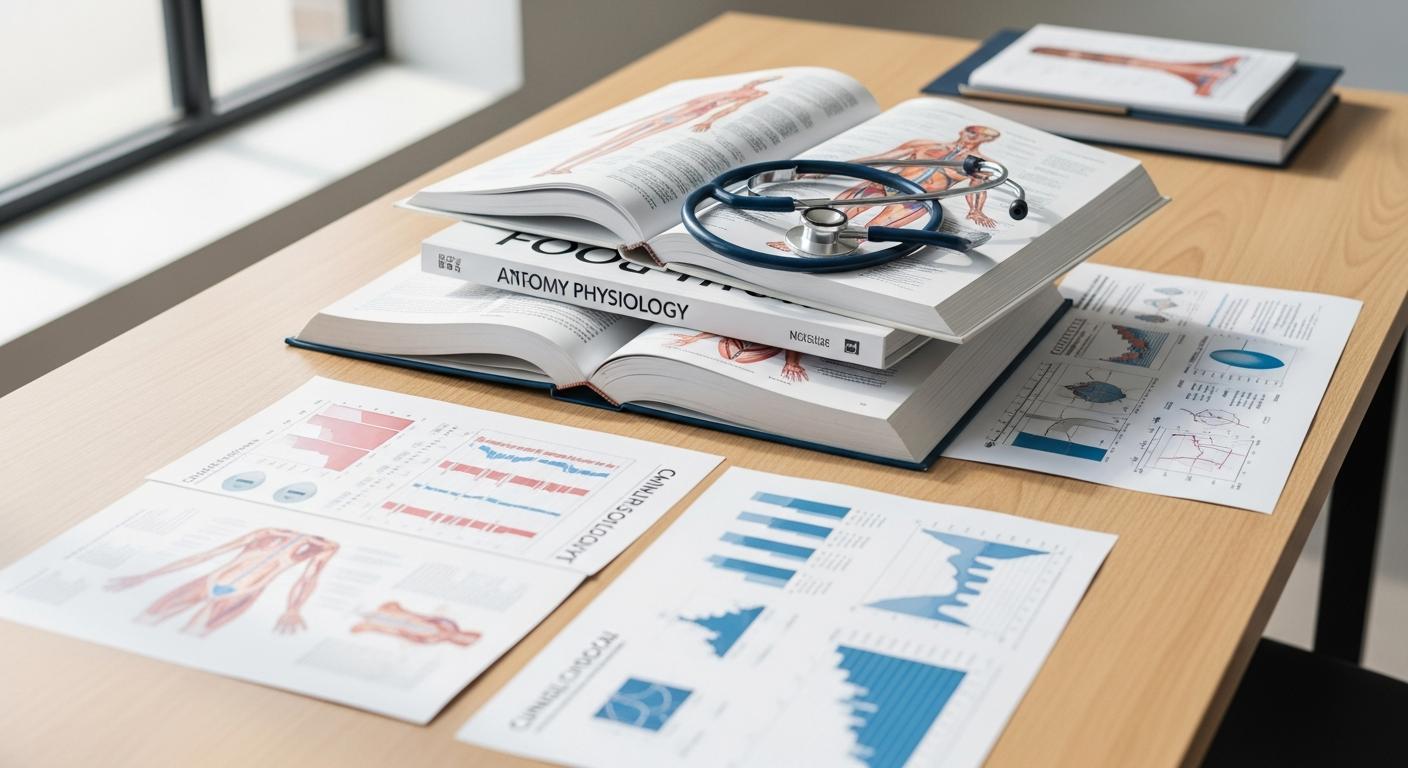
The Ofqual-regulated programmes are comprehensive in a way that short courses, by their nature, cannot be. They include a full anatomy and physiology component — so you understand the body you are working with at a level that genuinely informs every treatment decision you make. They include a business strand, because knowing how to work does not automatically mean knowing how to build a practice that pays the bills. And they include a structured portfolio of case studies, which means that by the time you qualify, you have not just learned the theory — you have done the work. Repeatedly, carefully, under proper supervision, with real clients.
The difference this makes is felt rather than described. Students who come through the full diploma programme do not finish with that low-level uncertainty that can follow a shorter training — the what if I have missed something? that sits quietly in the back of your mind when you are with a client. They finish ready. Genuinely, practically ready.
That matters enormously when you are asking someone to trust you with their body.
For the Career Changers — This One Is for You
I want to speak directly to the people who are holding down a full-time job, possibly managing children or elderly parents or both, running on not quite enough sleep, and feeling — beneath the busyness — a pull toward something more.
You are the people I think about most when I design these programmes.
The courses run evenings and weekends, because I understand what your life actually looks like. But more than the scheduling, I want to talk about what we build together — because the qualification is only part of it.
One of the hardest things about transitioning into a therapy career is the tipping point: the moment when you need to leave the security of what you have and trust that what you are building can actually hold your weight. I have watched students navigate this again and again, and it can be genuinely frightening. So one of the things I offer every student — not as an optional extra, but as part of the fabric of how we train together — is the business support and structure to manage that transition.
How to build a client base before you have fully left your other role. How to price your work without undervaluing it. How to manage the practical and emotional reality of going from employee to practitioner. How to grow from your first clients to a sustainable, thriving practice — if that is what you want.
Not every student wants to run a business. Some want to work within an existing clinic. Some want to add therapy skills to a healthcare role they already hold. Some want to look after their family better, or create a second income stream, or do something that feels meaningful for the first time in a long time. All of that is welcome here, and the support is shaped around where you are actually going.
This Work Attracts a Particular Kind of Person
I have never met an awful therapy teacher. I mean that. The people drawn to teach this work tend to be warm, generous, and deeply committed to their students. If you train somewhere other than here, you will very likely be taught by someone wonderful.
But I want to tell you what I believe is particular about training at Brookes Therapy Training School — not because I am trying to compete, but because I think it is genuinely true.
This is an inclusive environment. A real working clinic. Students train in the space where real clients are treated, which means the bridge between learning and practice is shorter and less frightening than it is in a classroom that exists only for teaching. The people who train here are not processed through a course. They are genuinely invested in, genuinely believed in, and sent out into the world genuinely ready.
Complementary therapy attracts the nourishers and the nurturers — the people who give a great deal of themselves, often in other areas of their lives, and who are looking for a path that lets them give in a way that also fills them up. That is not a small thing. This work can be, for the right person, one of the most satisfying and sustainable choices they ever make.
Learning for Life — Not Just for Practice

There is another group of people I want to speak to, because they matter too, and they sometimes feel as though what they want is not quite substantial enough to be worth mentioning.
It is.
We have parents coming to train with us whose children are anxious, stressed, or navigating additional needs. The landscape for SEND families in this country is, frankly, frightening — I speak as a SEND parent myself, and I say that with both empathy and outrage. The system is overstretched, the support is inconsistent, and the sense of being left to manage alone is something too many families know far too well.
We offer tailored, non-accredited programmes — in techniques like reflexology and head, neck and shoulder massage — specifically so that parents can learn safe, correct methods to use at home with their children. Not as a substitute for clinical support, but as a tool. Something to reach for. Something that belongs to you.
And then there is the couples massage course — a three-hour private session for two people to learn how to work with each other safely and well. Partners, friends, family members. Because touch is one of the most connecting things we have, and teaching people to use it thoughtfully, at home, in ordinary life — that is part of what I believe this work is for.
A Story I Think About Often
When my son was small, bedtime was a production. The day could not possibly be over. There were things to do, things to say, a thousand reasons the bath could not happen yet.
What worked — reliably, every time — was this: I would sit beside him in a darkened room, with quiet music, and stroke his feet. He would start out chatty, full of the day's news, happy to cooperate because he quite liked having his feet touched. And I would just keep going, steadily and gently, while the chatter slowed. The sentences became shorter. The gaps between them grew longer. His breathing deepened. His eyelids dropped.
I used to have to crawl out of the room on my hands and knees at the end, absolutely shattered and ready for bed myself. But I also left calmer than I had arrived. Because a dark room and gentle music and focused, quiet touch does something to the person giving it as well as the person receiving it.
That is what I want people to take away from the family and home-use programmes. Not a qualification. Not a business. Just the ability to offer that to someone you love.
Nothing replaces a clinical session with a trained therapist — I will always say that, because it is true, and because my clients come regularly for exactly that reason. But little and often, done with care and the right technique, is a profound gift. And it is one you can learn to give.
Where to Start
Whether you are considering a full diploma, a short course, or a home-use programme for your family, the best first step is a conversation. Every path here starts in a slightly different place, and I would rather spend twenty minutes understanding where you are than send you in a direction that is not quite right.
You do not need to have it all worked out. You just need to be curious.
EXPLORE OUR TRAINING COURSES
FIND OUT ABOUT OUR SHORT COURSES
GET IN TOUCH
Brookes Therapy Training School | Part of Brookes Therapies Restore. Renew. Revive. ReCoop Health, Nuneaton, Warwickshire